


What Is ESPR?
The ESPR aims to significantly improve the environmental sustainability of products placed on the EU market by:
- Reducing carbon and ecological footprints across the entire life cycle – from raw material extraction to end-of-life disposal or recycling
- Improving energy and resource efficiency
- Promoting the free movement and competitiveness of sustainable products within the internal market
The ESPR replaces and expands the Energy-related Products Directive (ErP Directive 2009/12/EC), broadening its scope beyond energy-related products to include nearly all physical goods. Exemptions include food, animal feed, pharmaceuticals, and living organisms.
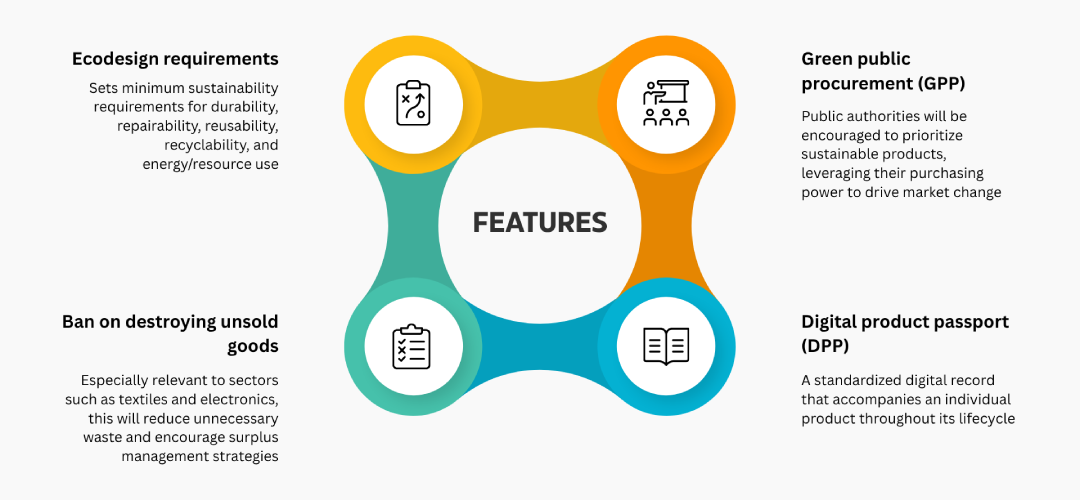
Its key features include:
Is Your Product Ready for the First Wave of ESPR Regulations?
The EU Ecodesign for Sustainable Products Regulation (ESPR) is transitioning from voluntary to mandatory. Whether you manufacture textiles or heavy industrial materials, non-compliance means losing access to the EU market. SGS offers specialized support for high-impact sectors:
· Textiles & Apparel: Services include Recycled Content Verification and Microplastic Release Testing.
· Furniture & Iron/Steel: We provide rigorous Durability Assessments and Life Cycle Assessments (LCA).
Impact on Consumer Products
On April 14, 2025, the European Commission published a communication entitled, ‘Ecodesign for Sustainable Products and Energy Labelling Working Plan 2025-2030’. This document included a list of priority product groups under the ESPR:

In addition, the ESPR will also target intermediate products – aluminum, iron and steel – that are widely used in consumer goods supply chains.
It should be noted that, while the information and communication technology (ICT) and energy-related product sectors are not directly prioritized, they will still be impacted through the transition of current ecodesign rules into the ESPR framework, the changes impacting intermediate products, and the horizontal requirements being prioritized:
- Repairability scoring
- Requirements for recycled content and recyclability of electrical and electronic equipment


1. Why choose SGS over a standard testing laboratory for ESPR compliance?
Meeting the new Ecodesign for Sustainable Products Regulation (ESPR) requires more than an isolated lab report; it demands a comprehensive data ecosystem. Unlike single laboratories, SGS offers the 4D Compliance Service Matrix—a "One-Stop" solution combining physical testing, chemical management, data validation, and supply chain auditing. This unified approach drastically reduces the risk of data discrepancies that frequently occur when using multiple vendors.
2. What specific product testing services does SGS offer to meet ESPR requirements?
We provide a robust suite of physical and chemical assessments designed to ensure your products are safe, sustainable, and market-ready:
Physical Performance Testing: We rigorously validate the durability, reparability, and recyclability of your goods—which is especially essential for highly regulated sectors like textiles and furniture.
Chemical Substance Management: We conduct integrated evaluations to manage Substances of Concern (SoC), ensuring seamless, simultaneous compliance with the ESPR, REACH, and RoHS directives.
3. How does SGS support the EU Digital Product Passport (DPP) and supply chain transparency?
Because the mandatory Digital Product Passport requires highly accurate and verified sustainability data, SGS acts as a trusted third-party auditor. Through our DPP Data Validation, we verify the authenticity of your Information Requirements. Furthermore, our Supply Chain Traceability services help integrate upstream supplier data and conduct thorough auditing, ensuring complete transparency from raw material sourcing to the finished product.
4. What is the timeline for ESPR implementation, and how can SGS help us prepare now?
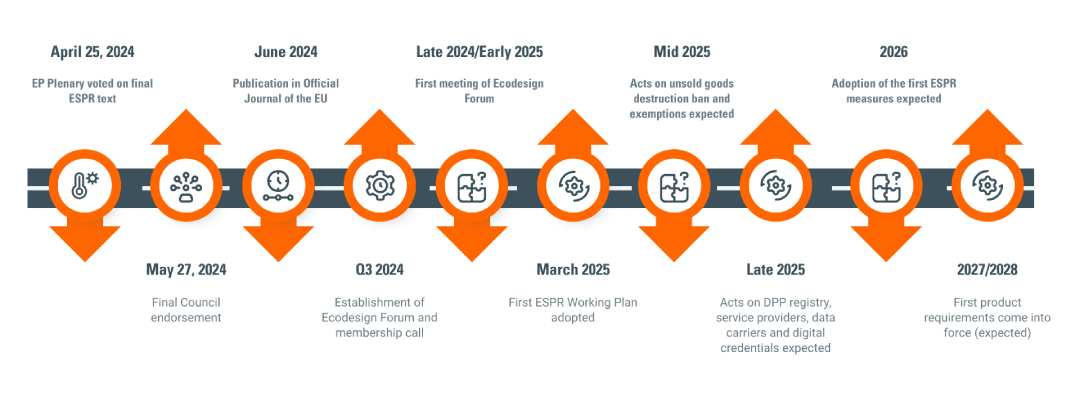
While the regulations are rolling out in targeted phases, early preparation is critical to avoid market lockouts. The years 2025 to 2026 will serve as the pilot scheme for the ESPR. SGS can assist you right now with pre-testing services and DPP pilot projects, allowing you to proactively test your data systems and product compliance before full enforcement officially begins.